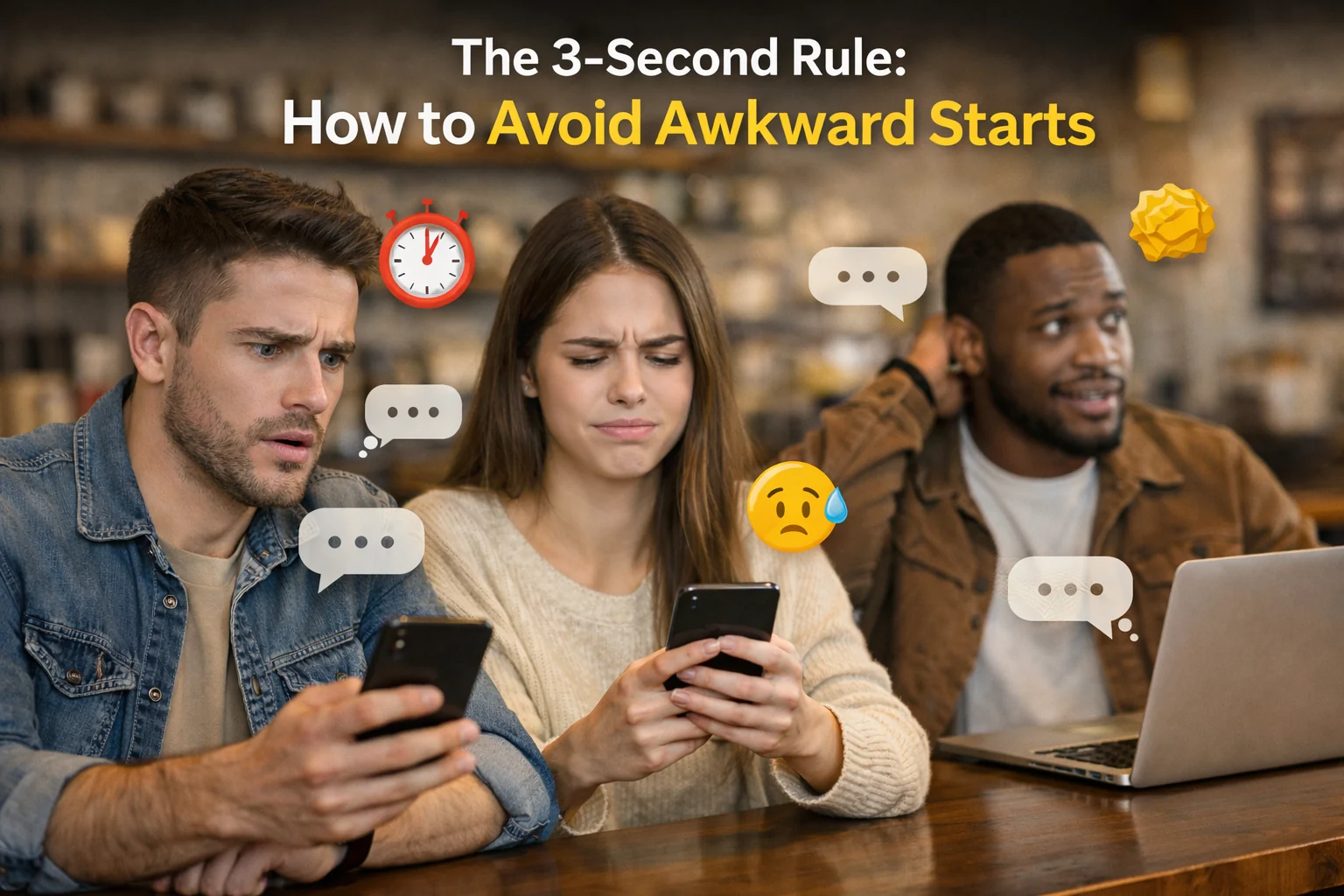

The 3-Second Rule: How to Avoid Awkward Starts
Simple, non-judgmental tips for using the 3-second rule to start conversations smoothly. Clear examples and quick actions you can use online and in person.
Why the 3-Second Rule works
The 3-second rule is a simple habit: when you notice an opportunity to speak or act, make a small, deliberate move within three seconds. That move can be a greeting, a question, or even a smile. The brief window prevents overthinking, reduces silence-filled awkwardness, and signals to others that you're present and engaged.
This guide gives practical, non-judgmental second rule avoid tips so you can start conversations confidently—both online and face to face.
Quick mindset shifts to try
Before tactics, try these mindset changes that make the rule easier to follow:
- Assume neutral intent. Most people aren’t judging you harshly for a small pause. Treat pauses as normal, not catastrophic.
- Aim for connection, not perfection. Good openers are low-risk and invite reply, not a flawless monologue.
- Make the first move simple. A short, clear starter is easier to deliver than a clever line.
These perspectives reduce pressure and make the 3-second rule practical instead of scary.
Concrete second rule avoid tips (with examples)
Openers that work in seconds
- Observational opener: Comment on something obvious. "Nice mug—where did you get it?" or online, "Love your banner—did you design it?"
- Question opener: Ask a one-line question that invites a short answer. "How long have you been here?" or in chat, "Which feature are you trying first?"
- Offer opener: Offer a small help or resource. "I have a quick tip if you want it." or "I can share a template—want it now?"
Each of these can be delivered in three seconds and keeps the interaction moving.
Situational examples
- In person at an event: Spot someone standing near the coffee and say, "Is this line always this slow?" It’s light, context-based, and easy to follow up.
- In a meeting: If there’s a pause after a presentation slide, jump in with, "One quick thought on that point..." That shows you’re engaged without commandeering the conversation.
- Online chat or forum: If someone posts a question, answer quickly with a short actionable step and an offer to expand: "Try X—it usually helps. Want me to walk through it?"
Short scripts you can adapt
Use these simple scripts until you feel comfortable improvising:
- "Hey—nice to meet you. What brought you here today?"
- "Quick question: are you using A or B for that?"
- "That’s interesting—how did you handle it?"
Scripts reduce hesitation because you don’t need to invent the perfect opener on the spot.
How to keep the conversation going
Starting is only half the job. After your three-second opener, follow up with these moves:
- Mirror the other person’s tone and length. If they respond briefly, keep your reply short. If they expand, offer a thoughtful follow-up.
- Use open-ended follow-ups: "Tell me more about that" or "What did you find most useful?"
- Hand the ball back: End your turn with a question or prompt to avoid long silences.
These habits encourage a natural rhythm and reduce the pressure on any one moment.
Practice without pressure
You don’t need real stakes to build the habit. Practice in low-pressure spots:
- At the coffee shop: compliment the music or ask about a pastry.
- In online communities: leave short, helpful replies to others' posts.
- With colleagues: volunteer one small idea in a meeting.
If you want to try a no-account, instant start for practicing conversational prompts, try Quick Start.
When to create an account or sign in
If you plan to track progress, save preferred scripts, or use tools that personalize suggestions, consider creating an account. Sign up at create your Wavlo account to store your settings.
Already saved templates or notes? Return quickly by using the log in to your Wavlo account page and pick up where you left off.
Ready to try it live?
When you feel ready to put these tips into action, head to the main chat area to practice in real time: Open chat. Start with one intentional three-second move per interaction and build from there.
Actionable takeaway checklist
- Decide on one simple opener you’ll use this week.
- Use the 3-second window: make your move within that time when an opportunity appears.
- Practice in low-pressure environments three times this week.
- Track what works and tweak your opener once you notice patterns.
Small, repeatable actions beat occasional grand gestures. The 3-second rule is a tool—use it to create momentum, not perfection.
Final note
If you ever feel awkward, remember it’s a normal part of learning new social habits. Keep your goals modest: reduce silence, be curious, and show up. Over time, the three-second habit will feel less like a trick and more like a natural part of how you start conversations.
Related Wavlo Guides
Explore focused pages for high-intent random chat topics.
Ready to Meet New People?
Start a safe and anonymous chat with Wavlo. Connect with people from all around the world!